
Perth Amboy Elite Roofing handles chimney repair in Perth Amboy, NJ, serving surrounding cities including South Amboy, Metuchen, South River, Highland Park and Roselle Park. In 20+ years of roofing on a city full of prewar brick chimneys, we have found that the chimney is the single most common source of leaks on an otherwise sound roof.
Our chimney work covers everything where the chimney meets the roof and the weather: step and counter flashing, crickets, crowns, caps and exterior mortar. Flashing is always replaced rather than reused when a roof is replaced, and every repair starts with a look at the attic or the wall beside the chimney, so we fix the actual entry point instead of sealing over the symptom.
Chimney Flashing Repair and Replacement
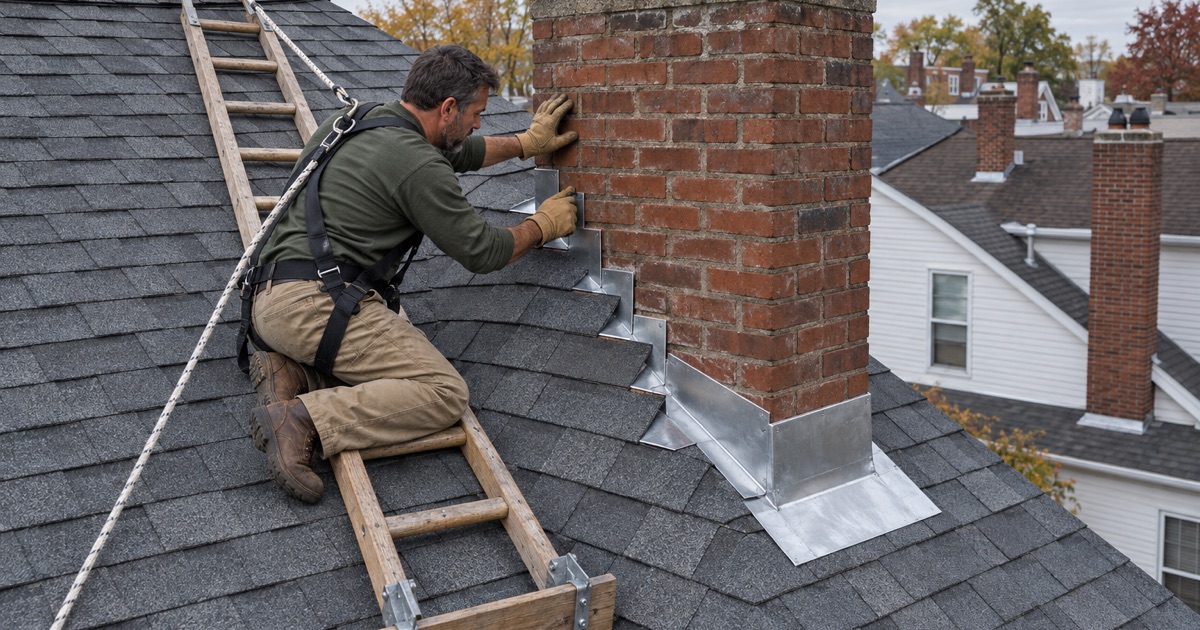
Step Flashing Along the Sides
Step flashing is a series of L-shaped metal pieces woven into each course of shingles along the sides of the chimney, with one leg on the roof and one against the brick. When a single piece rusts through or was never installed, water runs down the brick and into the house. On a roof replacement we install new step flashing with every course; on a repair we replace the failed section rather than caulking it.
Counter Flashing Set Into the Brick
Counter flashing covers the top of the step flashing and is set into a mortar joint or a cut reglet in the brick, so water running down the chimney is carried over the step flashing instead of behind it. Old counter flashing is often just glued to the face of the brick with roofing cement, which cracks and peels within a few seasons. We cut a proper reglet, set the new metal into it and seal the joint.
Apron Flashing at the Front
On the downhill side of the chimney, apron flashing carries water from the brick onto the shingles below. It has to lap over the shingles and turn up the face of the chimney under the counter flashing. A short or loose apron lets water reach the deck right at the front of the chimney, which is where many ceiling stains appear.
Crickets on Wide Chimneys
Why Water Pools Behind a Chimney
A chimney that sits across the slope acts like a dam. Rain, leaves and snow collect on its uphill side, and the flashing there sits under standing water and ice for much of the winter. Even well-installed flashing struggles under those conditions.
Building a Cricket That Sheds Water
A cricket, also called a saddle, is a small peaked frame built behind the chimney and covered with roofing or metal, so water splits and runs around both sides. We build it on the deck, cover it with ice barrier and flashing, and tie it into the step flashing along the sides. On a full re-roof, adding a cricket behind a wide chimney is a small cost against a recurring leak.
Chimney Crowns and Caps
Cracked or Missing Crowns
The crown is the concrete or mortar slab on top of the chimney that sheds water away from the flues and the brick. Old crowns were often just a thin layer of mortar that cracks with freezing and thawing, letting water soak straight down into the masonry. We repair hairline cracks with a crown sealant and replace crowns that are broken or crumbling, with an overhang that drips water clear of the brick face.
Chimney Caps
A cap covers the top of the flue to keep rain, animals and debris out. On an unused flue it also stops water from running down inside the chimney. We install caps sized to the flue and fastened securely, since a cap that blows off in a storm leaves the flue open again.
Masonry Repair on Older Brick Chimneys
Repointing Open Mortar Joints
Mortar wears faster than brick, and on older chimneys the joints near the top are often eroded deep enough that water flows into the wall of the chimney. Repointing means raking out the loose mortar and packing in new mortar matched to the existing brick. Using mortar that is harder than the old brick can crack the brick itself, so the mix matters on older chimneys.
Spalling and Loose Brick
When water soaks into brick and freezes, the face of the brick can flake or pop off, which is called spalling. Badly spalled or loose bricks near the top of the chimney are replaced so the masonry stays solid. If a chimney is leaning or loose above the roof line, rebuilding the top section is safer than patching it.
Chimney Repair During a Roof Replacement
Flashing Replaced With the Roof
A new roof is the best opportunity to fix a chimney’s flashing properly, because the shingles around it are already off. We replace the step, counter and apron flashing with the new roof and add a cricket where one is needed, instead of setting new shingles against old metal.
Chimneys on Older Perth Amboy Houses
Many houses here were built before 1940 with brick chimneys that have since been repaired several times with sealant and patches. When the roof is opened, we look at the condition of the brick at the deck line and inside the attic, and we point out any masonry that needs attention while the roof is still accessible.
Unused Chimneys
When a chimney no longer serves any heating equipment, owners sometimes choose to take it down below the roof line and deck over the opening. That removes a leak source permanently. Because it involves the roof framing, it is planned as structural work, which goes through the local construction office.
- 20+ Years in Roofing
- Itemized Written Estimates
- Attic-to-Roof Leak Tracing