
Perth Amboy Elite Roofing handles roof leak repair in Perth Amboy, NJ, serving surrounding cities including South Amboy, Metuchen, South River, Highland Park and Roselle Park. In 20+ years of chasing leaks on houses, two-family rentals and small commercial roofs, we have learned that the ceiling stain is the end of the story, not the start.
Our leak calls begin indoors. We look in the attic or at the top-floor ceiling as well as on the roof, following the water uphill to the place it actually gets in, and only then price a repair. A leak fixed at its source stays fixed, while a patch over the stain usually fails the next time the wind blows from the same direction.
This page covers how we trace and repair leaks, the places they most often start on pitched and flat roofs, and the leaks that turn out not to be the roof at all.
Our Step-by-Step Roof Leak Repair Process
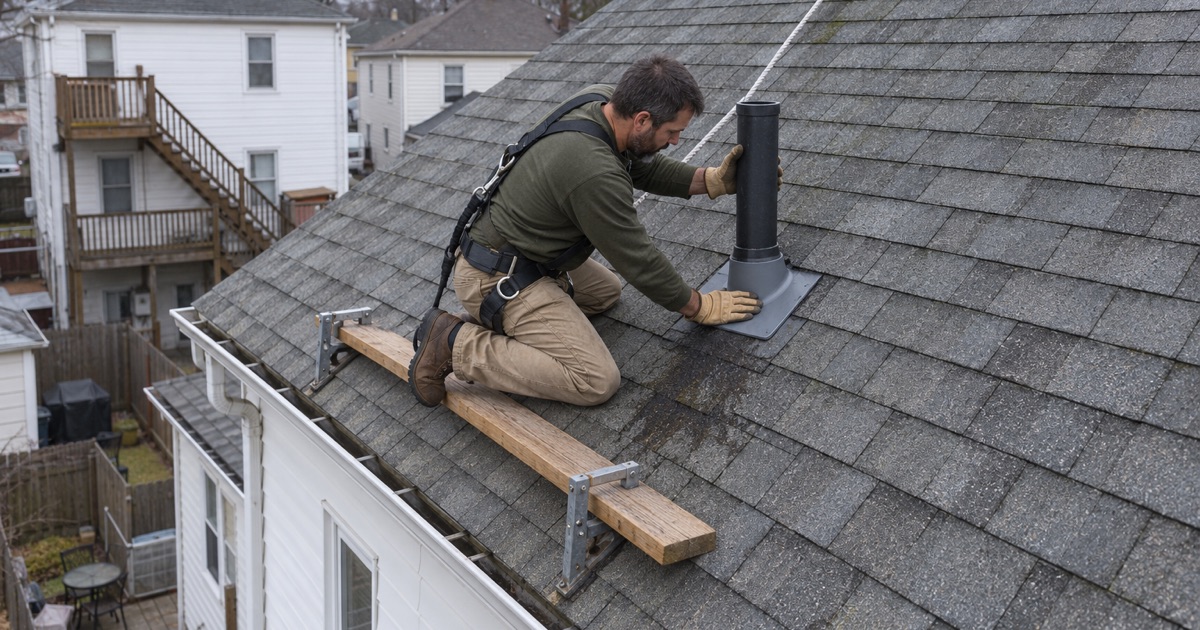
Step 1: Stop More Water Getting In
When water is actively coming through a ceiling, the first job is protecting the house. We tarp or temporarily seal the suspect area so the leak stops spreading into insulation, plaster and wiring while the roof dries.
A temporary measure is described as exactly that on the paperwork. It buys time for the permanent repair, and it is never left as the fix.
Step 2: Trace the Leak From Inside
In the attic, water leaves marks: dark streaks on the rafters, stained sheathing, rusted nail tips and compressed or discolored insulation. We follow those marks uphill from the stain to find the highest point where the wood is wet. On houses with finished attics or no access, the pattern of stains on the top-floor ceilings and walls narrows the search instead.
Step 3: Find the Entry Point on the Roof
With the inside trail mapped, we go to the matching area on the roof and look for the defect that lines up: a lifted shingle, a loose piece of step flashing, a cracked boot, an open seam. When nothing is obvious, controlled water testing, working uphill a section at a time, shows where the water gets through.
Step 4: Repair the Source
The repair matches the cause. Failed flashing is replaced rather than caulked, cracked pipe boots get new boots or lead flashing boots, damaged shingles are replaced and sealed into the course, and membrane seams are rebonded or patched. Wet decking found along the way is shown to you and replaced if it has softened.
Step 5: Document What We Found
You get a short written description of where the water entered, what we repaired and any other weak spots we noticed nearby. If the leak followed a storm, the photos and notes are written so you can use them for your own insurance claim.
Where Roof Leaks Start on Pitched Roofs
Chimney and Sidewall Flashing
The joint between a roof and a brick chimney, a dormer or a sidewall is the single most common leak source we find. Step flashing must interlock with every course of shingles, and counter flashing set into the masonry or tucked behind the siding must lap over it. When either piece rusts, loosens or was caulked instead of installed, water runs straight down the wall into the house.
Wide chimneys add another problem: water and snow build up behind them. A cricket, or saddle, on the uphill side diverts that water around the chimney instead of letting it pool against the brick.
Valleys and Dormer Joints
A valley collects the water from two slopes, so any weakness there is tested in every rain. Worn valley metal, nails driven too close to the center, or shingles cut short in a closed valley all let water under the roof. Dormers add short valleys and wall joints in a small space, which makes them a frequent leak point on older Cape and colonial houses.
Vents, Pipe Boots and Skylights
Plumbing vents, bathroom and kitchen exhausts and skylights all pass through the roof, and each relies on a seal that ages faster than the shingles. Rubber pipe boots crack in the sun, exhaust hoods lose their sealant, and skylight curbs lose their flashing. These are often the easiest leaks to fix once they are found.
Ice Dams and Wind-Driven Rain
In winter, snow melting over a warm attic refreezes at the eave and backs water up under shingles that were never meant to hold standing water. In nor’easters, wind drives rain sideways under shingle edges and up behind flashing. Both produce leaks that come and go with the weather, and both are fixed by addressing the cause: attic insulation and ventilation for ice dams, sealed shingle edges and properly lapped flashing for wind-driven rain.
Leaks on Flat and Commercial Roofs
Open Seams and Damaged Membranes
On a modified bitumen, EPDM or TPO roof, water enters through open laps, splits, punctures and blisters. Because the roof is nearly flat, water can travel a long way between the membrane and the deck before it shows up inside. We check the seams around the leak area and test the insulation for moisture, since wet insulation spreads a small leak across a large area.
Parapets, Coping and Through-Wall Flashing
On small apartment and mixed-use buildings, many leaks come from the parapet rather than the roof surface. Cracked coping joints, open through-wall flashing and missing counter flashing at the base of the wall let water into the masonry, where it runs down and appears inside. We reflash and reseal these details as part of the leak repair.
Drains, Scuppers and Ponding
When a roof drain or scupper clogs, water rises over seams that were only built to shed it. A leak that appears only after heavy rain on a flat roof often traces back to a blocked outlet. We clear the drainage, repair the seams that were submerged, and point out any low spots where water collects after every storm.
Leaks That Turn Out Not to Be the Roof
Condensation and Attic Moisture
Frost on the underside of the deck in winter melts on the first warm day and drips onto the ceiling, looking exactly like a roof leak. The cause is warm, moist air from the house reaching a cold attic, often through a bathroom fan that vents into the rafters or blocked soffit vents. Fixing the ventilation fixes the stain, and no roofing is needed.
Gutters, Fascia and Leaders
A clogged or poorly pitched gutter can overflow behind itself, soak the fascia and send water into the wall below the roof line. Leaders that discharge against the foundation cause basement leaks that owners sometimes blame on the roof. We check the gutters and leaders on every leak call for that reason.
Plumbing and Masonry
A supply line in an exterior wall or a top-floor bathroom can leak only when the fixture is used, which is easy to mistake for a leak that only appears in rain. Brick chimneys and walls absorb water through cracked crowns and open mortar joints, too. When the trail leads to plumbing or masonry rather than the roof, we tell you so instead of selling a roof repair you do not need.
- 20+ Years in Roofing
- Itemized Written Estimates
- Attic-to-Roof Leak Tracing