
Perth Amboy Elite Roofing handles skylight installation in Perth Amboy, NJ, serving surrounding cities including South Amboy, Metuchen, South River, Highland Park and Roselle Park. With 20+ years of roofing behind us, we install skylights as roofers: the glass is the easy part, and the flashing around it is what decides whether the room stays dry.
We install new skylights, replace old and leaking units, and reflash skylights during a roof replacement. Every installation uses the manufacturer’s flashing for that unit and roof type, rather than metal bent on site and sealed with caulk, because improvised flashing is the reason so many skylights get a bad reputation.
Skylight Types and Where Each Fits
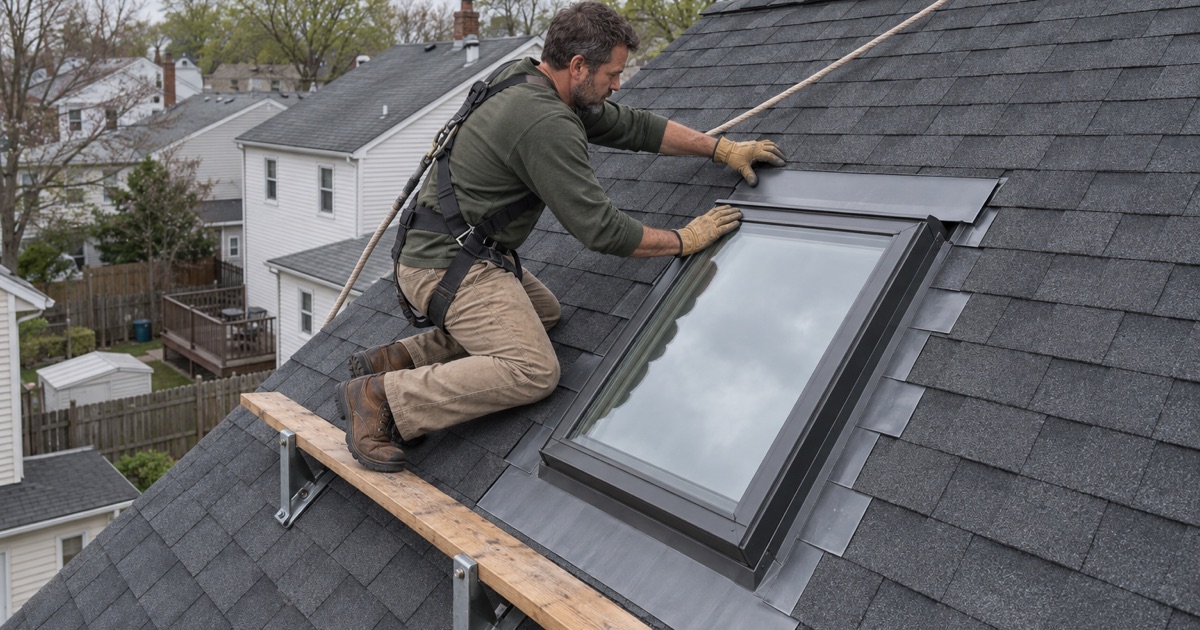
Deck-Mounted Skylights
Deck-mounted skylights attach directly to the roof deck and sit low on the roof, with their own built-in frame. They suit pitched shingle roofs and give a clean, low profile from the street. Their flashing kits are designed to weave into the shingle courses, which makes them reliable when installed to the manufacturer’s instructions.
Curb-Mounted Skylights
Curb-mounted skylights sit on a raised frame, or curb, built on the roof. The curb lifts the glass above the roof surface, which makes these units the right choice for low-slope and flat roofs, where water moves slowly and can stand against anything set flush. The membrane or flashing runs up the sides of the curb, and the skylight caps it.
Fixed and Venting Skylights
Fixed skylights bring in light only. Venting skylights open, either manually or with a motor, to let warm, moist air out of a kitchen, bathroom or top-floor bedroom. Some venting models close automatically when rain sensors detect water, which is useful on a skylight that is out of reach.
Tubular Skylights
In hallways, closets and bathrooms where there is no room for a full skylight and shaft, a tubular skylight brings daylight down a reflective tube from a small dome on the roof. The roof opening is small, and the flashing is a single piece, so the installation is quick and the leak risk is low.
Installing a New Skylight
Planning the Opening and the Shaft
A new skylight starts in the attic, not on the roof. We locate the rafters, plan the opening so as few rafters as possible are cut, and work out the light shaft down to the ceiling. Where a rafter has to be cut, the opening is framed with headers so the roof keeps its strength, and that framing work generally goes through the local construction office.
Cutting In and Flashing the Unit
On the roof, we cut the opening, install the skylight on the deck or on its curb, and wrap the opening with self-adhering ice and water barrier before the flashing goes on. The flashing kit’s pieces are woven into the shingle courses from the bottom up, so each one laps over the one below. Water running down the slope is carried around the skylight and back onto the roof below it.
Finishing the Interior
Inside, the shaft between the roof and the ceiling is framed, insulated and finished so warm room air does not condense on cold surfaces. A poorly insulated shaft is a common source of drips that look like a leak but are actually condensation.
Skylights Under Tenants and Solar Panels
On a rental, cutting a new opening means working inside a tenant’s top-floor room as well as on the roof. We let the tenants know which days the crew needs inside access, cover the floor and furniture below the opening, and close the interior side of the shaft the same day the roof is cut. Where solar panels share the roof, the skylight location is planned around the panel layout so neither has to move later.
Replacing an Old or Leaking Skylight
Signs a Skylight Needs Replacing
Fogging between the panes means the glass seal has failed. Cracked glazing, rotting wood frames, rust on metal frames and recurring water stains around the shaft are other signs that a skylight is near the end of its life. Older units with single glazing also lose a great deal of heat in winter.
Repair or Replace
When the skylight itself is sound and the leak is at the flashing, reflashing the unit is the right repair. When the glass seal has failed or the frame has rotted, replacing the unit is better value than repairing around it. We tell you which applies after looking at the skylight from both the roof and the room below.
Sizing a Replacement to the Opening
Replacement skylights come in standard sizes, and older units may not match any current size exactly. We measure the existing opening and choose a unit that fits it, or adjust the framing if a slightly different size is needed, so the new skylight sits square and seals properly.
Skylights and a New Roof
Reflashing During a Roof Replacement
A roof replacement is the best time to deal with a skylight, because the shingles around it are already off. A sound skylight gets a new flashing kit woven into the new shingles; an older one is usually worth replacing at the same time. Reusing old skylight flashing under new shingles is a common shortcut, and it is a common reason a brand new roof leaks.
Skylights on Flat Rear Roofs
Many two-family houses have a low-slope rear roof over a kitchen or bathroom, where a curb-mounted skylight can bring light into a dark room. The curb is flashed into the membrane, the membrane runs up its sides, and the skylight sits on top, so ponding water never reaches the glass.
Light, Heat and Placement
Skylight placement matters as much as size. A north-facing skylight gives soft, steady light with little summer heat, while a south-facing one brings in more light and more warmth. Low-emissivity glass helps control heat gain, and in a room that already runs warm, a venting skylight lets the heat escape from the top.
- 20+ Years in Roofing
- Itemized Written Estimates
- Attic-to-Roof Leak Tracing